




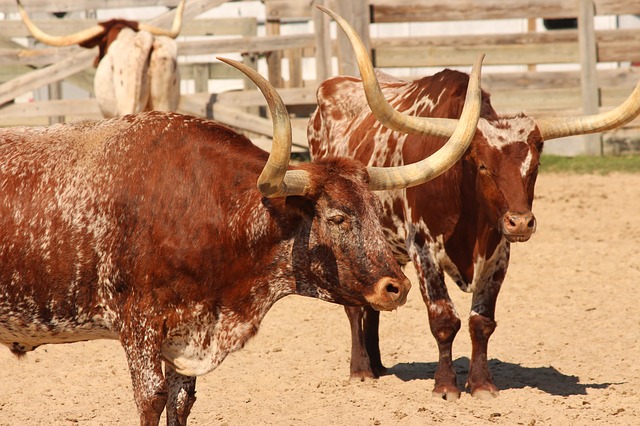
In Texas, the word “longhorn” usually brings two things to mind: football and cattle. But another kind of longhorn has been making headlines in the U.S.—the Asian longhorn tick. Native to East and Central Asia, this pest has established footholds in places such as New Zealand, Australia, and other Pacific locations, and has now been found in the United States. After a sizable colony was discovered infesting a sheep in New Jersey, the Asian longhorn tick gained national attention as a possible new invasive species, although its full spread and potential impact are still being determined. These ticks have not yet been documented in Texas, but they are worth watching as they become established in the U.S. Their arrival also serves as a timely reminder about tick safety, especially as summer winds down and more people take advantage of the weather for camping and other outdoor activities.
What do Asian longhorn ticks look like?
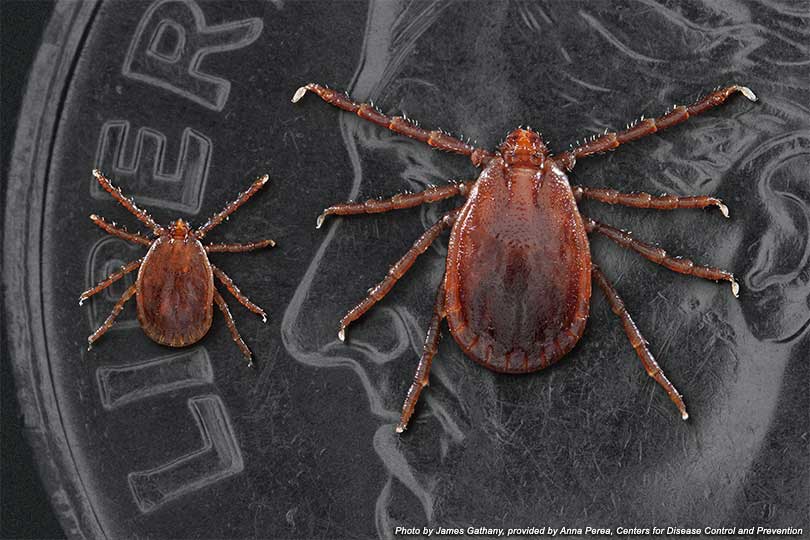
These invasive pests are quite small, ranging from less than 0.1 inch—smaller than a poppy seed—to about the size of a pea when a fully grown adult is engorged with blood. To the naked eye, they are plain and difficult to identify, with light-to-dark reddish-brown coloring and no distinctive markings. Their mouth parts are shorter and wider than those of many common tick species, but that difference is more likely to be recognized by an expert than by the average person. Juveniles are especially easy to miss because of their tiny size, which is one reason these ticks are often discovered in very large numbers. Ticks at any stage may feed around the ears, back of the neck, shoulders, groin, and armpits. Because Asian longhorn ticks look so similar to other native tick species in the United States, accurately distinguishing them can be difficult even for professionals.

Where are Asian longhorn ticks located?
Asian longhorn ticks are native to East and Central Asia and have become an established invasive species in Oceania. In the United States, documented sightings have occurred in New Jersey, Virginia, West Virginia, Maryland, North Carolina, New York, Pennsylvania, and Arkansas, with verified records dating back to at least 2013. There is concern that these ticks could continue spreading into other parts of the country, especially because they are capable of essentially hibernating, allowing them to survive across a wide range of climates.
Like many other tick species, Asian longhorn ticks prefer areas with tall grass and high humidity near the soil. Favorable habitats include pastures, hay fields, wildflower areas, and other unmowed spaces. They are particularly common in places where animals frequently pass through. To find a host, these ticks hold onto a blade of grass with their rear legs while extending their front legs, ready to grab onto an animal as it moves by.

Are Asian longhorn ticks common?
In the United States, Asian longhorn ticks are still a relatively new arrival, so the number of documented cases remains limited. However, when a colony is discovered, the population is often extremely dense. One reason their numbers can grow so quickly is that all documented females in the United States reproduce through parthenogenesis, meaning eggs develop without fertilization from a male. Although these ticks still need to feed on three hosts—one during each life stage—before reaching maturity, they can develop from a newly laid egg into an adult within a year. Once mature, a female can produce up to 2,000 eggs in less than three weeks. With every documented female capable of reproducing this way, it is easy to see how a population can increase rapidly.
What is the difference between Asian longhorn ticks and deer ticks?
Most people would have a difficult time telling these two ticks apart. While deer ticks may have more noticeable coloring than Asian longhorn ticks, the two are similar in size and overall appearance. Male deer ticks are often a plain brown color, making them especially easy to confuse with Asian longhorn ticks.
The two biggest differences involve reproduction and the diseases these ticks are known to carry. In the United States, Asian longhorn ticks reproduce exclusively through parthenogenesis, while deer ticks reproduce sexually. They are also known to carry different diseases. We’ll take a closer look at those differences in the next section.

Are Asian longhorn ticks dangerous?
The short answer is yes, Asian longhorn ticks can be dangerous, but the type of danger they pose—and who may be at risk—makes the issue more complicated. In East Asia, where these ticks are native, they are known to carry several viruses and bacteria that can harm humans and cause potentially serious illnesses, including SFTS, human granulocytic anaplasmosis, and Japanese spotted fever. In the United States, there have not yet been reported cases of human bites from Asian longhorn ticks, but that does not mean there is no reason for concern. Because these ticks are still relatively new to the U.S., researchers have not yet determined which viruses and bacteria they may be capable of carrying here. There is concern that they could potentially carry pathogens already spread by native ticks, becoming another vector for diseases such as Lyme disease, Rocky Mountain spotted fever, and Powassan disease. These illnesses can have serious and long-lasting effects, ranging from arthritis and brain inflammation to amputation and, in severe cases, death.
Although Asian longhorn ticks are not yet a documented threat to humans in the United States, they are a known danger to livestock and other animals. In the U.S., these ticks have been found on cattle, sheep, goats, horses, deer, opossums, raccoons, and dogs. They can carry pathogens that cause babesiosis in dogs, an infection that attacks red blood cells and may lead to anemia, systemic shock, and relapse, as well as theileriosis in cattle, which affects red and white blood cells and can cause anemia, jaundice, and even death. Because these ticks can build up in such large numbers, severe infestations may also cause significant blood loss, leading to anemia and, in extreme cases, death from exsanguination.
While experts recognize the potential concerns surrounding these new invasive ticks, it is also important not to overlook the more immediate threat posed by native tick species, whose ranges and populations have expanded as winters have become warmer. At the first sign of ticks in your home or yard, call The Bug Dude @ 1-800-310-BUGS (2847). Lyme disease remains a serious concern, and in some parts of the United States, an estimated 25% of deer ticks carry it. Even as new species attract attention, established tick threats are still worth keeping in mind. Let The Bug Dude ease your worries and knock them dead!

How do you prevent tick bites?
Whether you’re dealing with Asian longhorn ticks, deer ticks, or other tick species, taking steps to prevent bites is important for both people and animals, especially in late spring and early summer when ticks are seeking blood meals to continue their life cycle. If you’re concerned about ticks in your yard, particularly if your property is near wooded or grassy areas, consider calling a pest control professional to treat the area with products designed to eliminate ticks. In addition to calling The Bug Dude, you can help make your property less inviting to ticks by keeping grass cut low, controlling weeds, reducing or removing brush, and clearing away wood debris.
If you’re spending time in a potential tick harborage area that has not been professionally treated, following basic tick prevention practices can help reduce the risk of bites. Wear long sleeves and pants, use an insect repellent containing DEET on people only—since DEET can be harmful to pets—and keep your pets current on preventative tick treatments. After leaving the area, thoroughly check yourself and your pets for ticks as soon as possible. For additional information about prevention and symptoms, visit the CDC’s tick resource page.

As summer gives way to fall, remember to practice good tick safety whenever you spend time outdoors. It’s also worth keeping an eye on the Asian longhorn tick as researchers continue to track its spread in the United States. After all, no one in Texas wants to see this new longhorn become a problem for our beloved longhorns.
Additional Resources:
“Asian longhorn tick, (AKA, East Asian, Scrub or Bush Tick): Newly Discovered Invasive Tick in the United States” – The TickApp for Texas & the Southern Region
“This invasive tick can clone itself and suck livestock dry” – Leah Rosenbaum – ScienceNews
“5 Things to Know About the New Tick Species in the US” – Rachael Rettner – Live Science
“Tick Bites: Symptoms & Treatment” – Elizabeth Palermo – Live Science
“Asian Longhorned Tick, Haemaphysalis longicornis” – Michael J. Skvarla & Erika Machtinger – PennState Extension
“An Invasive New Tick Is Spreading in the U.S.” – Donald G. McNeil Jr. – The New York Times

