





Rats are incredibly adaptable and have consistently thrived alongside human populations. The major lifestyle and economic changes we have experienced, including throughout COVID 19, have shown just how resilient they are when it comes to surviving and adjusting to whatever conditions come their way.
Rats that have established themselves near restaurants and other food service businesses are used to having easy access to food and water. However, with many establishments either shut down or operating at a much lower capacity, those reliable food sources have been greatly reduced, forcing rats to search for new ways to survive. As Dartunorro Clark reported for NBC News in the article “Starving, angry and cannibalistic: America’s rats are getting desperate amid coronavirus pandemic“, displaced rats can resort to extreme behavior. Large numbers of rats have been moving into new areas in search of food, and when they discover a promising location, it is often already occupied. This leads to aggressive and sometimes deadly territorial fights. In situations where food becomes extremely limited, rats have even turned to cannibalism, particularly infanticide, as a survival tactic.
And of course, there is The Black Plague. Although nearly 700 years have passed since the disease swept through Europe and claimed the lives of more than 20 million people, its legacy still remains deeply rooted in Western society. It continues to serve as one of the most well-known examples of the serious dangers that large rat populations can present to humans.
What Dangers do Rats Pose?
A rat infestation is far more than just a nuisance. These pests can create serious health and safety concerns for both people and property. When most people think about rats, disease is often the first danger that comes to mind. Historically, black rats carried fleas infected with the bubonic plague that contributed to The Black Death, but even today rats are known to carry more than 40 diseases harmful to humans, including murine typhus, plague, and rabies. The impact of rat borne illnesses has been so severe that some estimates suggest rats have claimed more human lives over the last 1,000 years than all wars and revolutions combined.
Disease, however, is only part of the problem. Rats also pose a major threat to agriculture, destroying an estimated 20% of agricultural products worldwide each year. They can negatively impact local ecosystems as well by preying on nestlings, competing with native wildlife for food, and even hindering the regrowth of certain tree species. In some cases, rats can also become a direct physical threat to humans. Each year in the United States, roughly 14,000 people report rat attacks, and some of those incidents result in severe or even fatal injuries.

What are the Warning Signs of a Rat Problem?
Rats are nocturnal animals, meaning they are most active during the night. If you are hearing scratching, scurrying, or movement inside your walls or attic after dark, it may be time to call The Bug Dude at 800 310 BUGS (2847). There is a strong possibility that rats have made their way into your home. Even if the sounds seem too loud to be caused by a single rat, keep in mind that several rats moving around in an attic can create a surprising amount of noise.
You should also watch for other common signs of rat activity, including droppings and nests. Rat droppings are typically dark brown, oblong in shape, and tapered at the ends. Nests are often built from soft materials such as paper, cardboard, cloth, insulation, or even hair, and are commonly found in quiet, undisturbed areas or near food and water sources. Another important warning sign is chewed wiring inside your home or vehicle. Damaged wiring not only points to a potential rat infestation, but it can also create serious safety hazards and lead to expensive repairs. And of course, one of the clearest signs of a rat problem is actually spotting rats inside your home, garage, shed, or other structures on your property.
How can you Prevent a Rat Infestation?
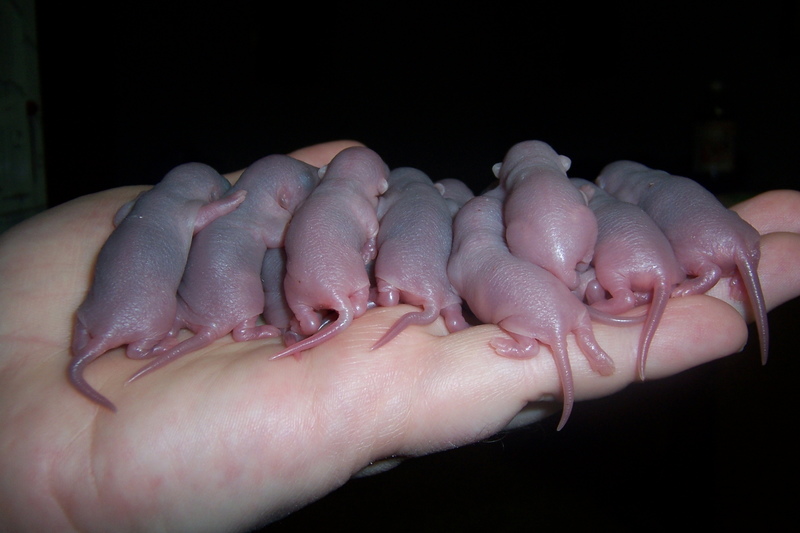
Once rats gain access to a structure, their population can grow at an alarming rate. A single female rat can produce seven to ten litters per year, with each litter averaging six to ten pups. Under the right conditions, a rat population can grow from just two rats to nearly 1,250 in only one year if the infestation is left untreated. That is why prevention is so important. By the time you begin noticing signs of rat activity, there is a good chance the population has already grown significantly. Do not wait until the problem gets worse. Call The Bug Dude at 1 800 310 BUGS (2847).
So how can you keep rats from getting into your home? It can be more challenging than many homeowners realize. A rat only needs an opening about the size of a quarter to squeeze into a structure, and they are excellent climbers and jumpers. Rats can climb trees and brick walls, travel along utility lines, jump several feet vertically and horizontally, and even chew through materials such as lead, cinder block, and aluminum sheeting. Even so, there are several steps you can take to make your home far less appealing to rats searching for food, water, and shelter. Here are a few helpful tips to help keep your home rat free:
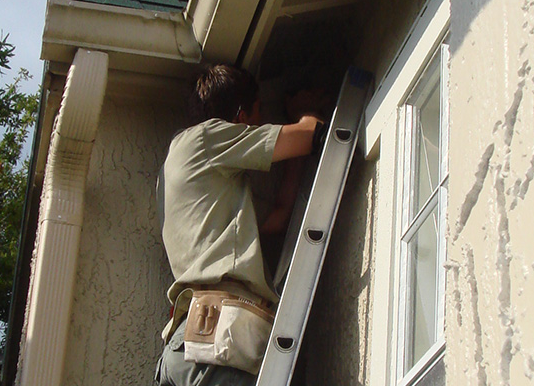
- Seal all visible entry points around your home. Remember, rats can fit through extremely small openings and can also gnaw on smaller gaps to enlarge them enough for entry. A quick call to The Bug Dude at 1 800 310 BUGS can help give you peace of mind. All exclusion work performed by The Bug Dude comes with a one-year warranty.
- Trim tree branches away from your roof and keep vines from growing along exterior walls. This helps reduce access to areas of your home that are harder to inspect regularly, especially around the roof line.
- Keep trash cans tightly sealed at all times. Make sure lids are securely attached so rats cannot gain easy access to food sources.
- Store pet food in sealed containers. If pet food is kept in the garage, metal containers are the best option. If your pets can eat it, rats will gladly eat it too.
- Remove bird feeders and bird baths from your yard. The goal is to eliminate anything that may attract rats onto your property, and easily accessible food and water sources are some of the biggest attractants.

How do you Treat a Rat Infestation?
Because rats reproduce so quickly and can create serious health and property risks, it is important to address a rat problem as soon as you notice the first signs of an infestation. While it may be tempting to try handling the problem on your own, successfully eliminating rats involves much more than simply setting a trap and hoping for results. Rats are intelligent and cautious animals, so choosing the right treatment products and placing them in the proper locations is critical to achieving effective control.
By calling The Bug Dude at 1 800 310 BUGS and scheduling a visit from a trained technician, you can be confident that the pest problem is properly identified and professionally treated. An experienced technician can determine the safest and most effective treatment plan for your specific situation while helping protect you, your family, your pets, and your home throughout the process.
Now more than ever, it is important to protect your home and family by addressing rat problems at the very first signs of an infestation. Do not let rats become one more source of stress or concern. Call Mid Cities Pest Control at 817 354 5350 and let the professionals help keep your home safe and protected.
Further Reading:
“Starving, angry and cannibalistic: America’s rats are getting desperate amid coronavirus pandemic” – Dartunorro Clark – NBC News
“Black Death” – History.com Editors – A&E Television Networks
“The Facts about Rats” – U.S. Fish & Wildlife Service
“Facts About Rats” – Alina Bradford – Live Science

