




When someone mentions “oil,” what immediately comes to mind? With Thanksgiving right around the corner, perhaps you picture the olive oil you’ll need for those roasted potatoes on the holiday table. Maybe your thoughts turn to the long drive across the state to visit family, passing thousands of oil wells scattered across the landscape along the way. And if you’re already thinking about that holiday road trip, you might suddenly remember that your car is due for an oil change before you head out. Of course, as the holiday rush starts to set in, your mind might instead go straight to the essential oil diffuser and a little lavender oil to help take the edge off. Whatever type of oil you thought of first, there’s another kind that deserves some attention this time of year. It can play an important role in protecting the health of your outdoor plants—particularly trees, shrubs, and bushes—but is easily overlooked amid the holiday bustle: dormant oil.

What is Dormant Oil?
Dormant oil is a form of horticultural oil intended for use on woody plants while they are dormant, generally from late fall through early spring. It provides a non-chemical way to help control a variety of pests that spend the winter on these plants. But what exactly qualifies as a woody plant? As the name implies, this includes trees, shrubs, and bushes. Horticultural oils themselves are typically made from highly refined petroleum oils, although some can also be derived from plant sources, and they are specially processed for safe use on plants. These products are very different from the common oils you may have around the house, so one should never be substituted for another. Horticultural oils also commonly contain an emulsifier, allowing them to mix properly with water so they can be applied safely and evenly to affected plant surfaces using a power sprayer.
How Does Dormant Oil Work?
When dormant oil is applied to a woody plant, it works primarily through physical contact with the pests present on the plant. The exact effect can vary depending on the species, but in general the oil controls pests in three main ways: suffocation, disruption of cell membranes, and repellency. In many cases, the oil coats the spiracles, or tiny air openings, that pests rely on to breathe, causing them to die from asphyxiation. With certain pests, the oil can also interfere with fatty acids and disrupt normal metabolism, effectively acting as a poison. Beyond killing existing pests, dormant oil may also discourage some species from feeding on the plant or laying their eggs there. No matter which effect a particular pest is most vulnerable to, dormant oil can be a highly effective way to address a pest problem before it grows into a full infestation and before those pests have a chance to damage new spring growth.
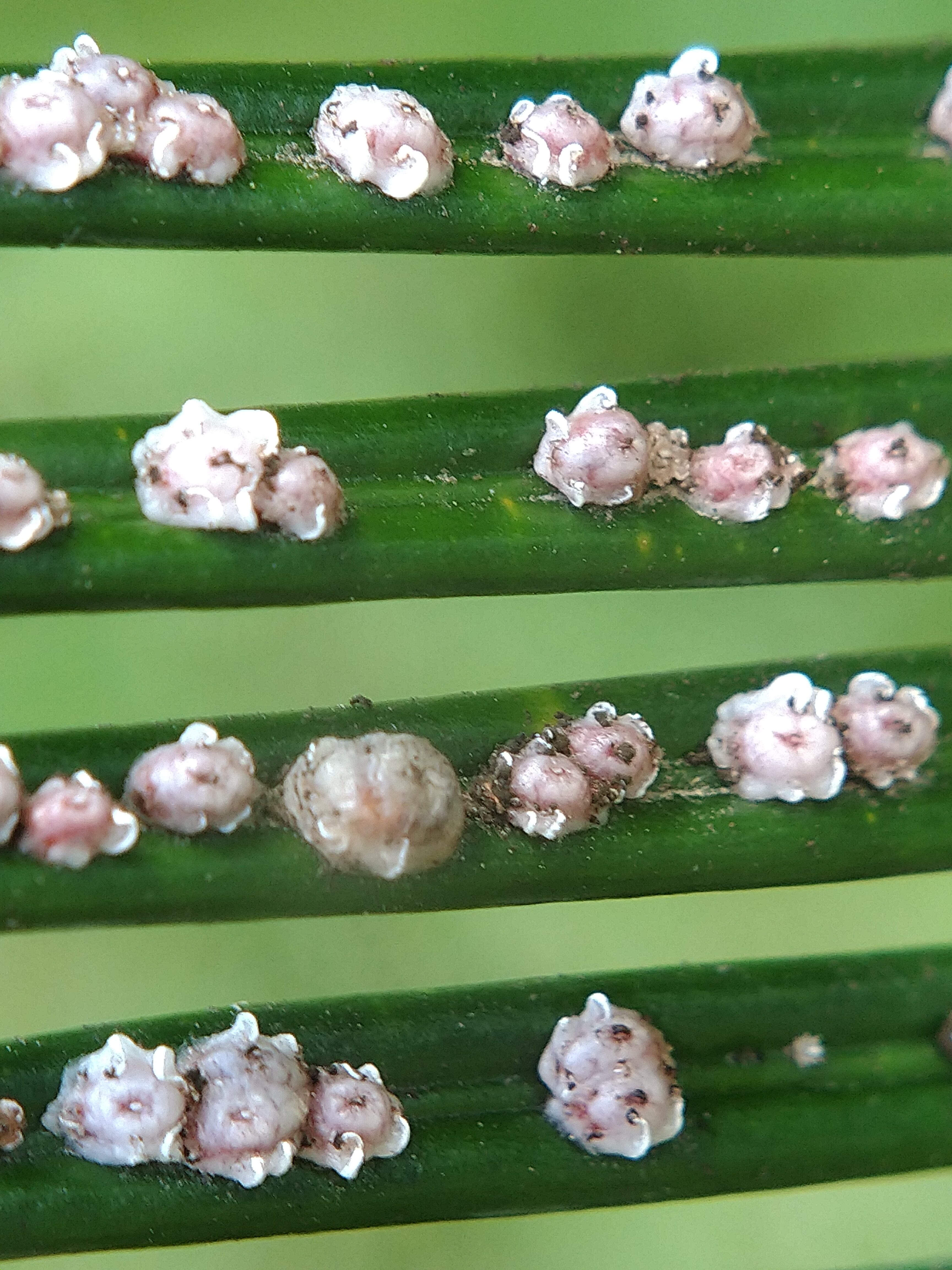
Which Pests is Dormant Oil Effective Against?
As a general rule, dormant oil is most effective against pests that spend the winter as eggs on woody plants. Common targets include caterpillars such as webworms and armyworms, along with mites, scale insects, aphids, lace bugs, leaf beetle larvae, and plant bugs. In some cases, dormant oil may also be used to help control certain fungal problems, including powdery mildew, rust, and sooty mold.
Is Dormant Oil Dangerous?
When dormant oil is applied by a Bug Dude technician, it can be an extremely safe and effective form of pest control. It is safe around people and pets, as well as wildlife and crops. Although dormant oil is considered a broad-spectrum treatment—meaning it can affect many different types of pests rather than targeting only one—it is generally less harmful to beneficial insects than many chemical pest control methods. The biggest risk comes from improper application, such as a DIY treatment performed without the proper knowledge, which can cause serious damage to the very plant you are trying to protect. Before treating a plant, a Bug Dude technician will consider several important factors, including whether the target pest is susceptible to dormant oil, whether the plant is healthy enough for treatment, whether the plant variety is especially sensitive, whether weather conditions are suitable, and exactly where the oil must be applied to be effective. If applied incorrectly, dormant oil can weaken or discolor an infested plant. That is why it is always best to trust the experts at The Bug Dude @ 800-310-BUGS (2847) for your pest control needs.

How do I Know if I Need a Dormant Oil Treatment?
If you’re trying to decide whether your trees, shrubs, or bushes might benefit from a dormant oil treatment, start by thinking back over how those plants performed during the past year. Did you notice webworm webbing in the branches? Were the leaves heavily damaged or eaten by pests? Did you see large numbers of aphids, mites, or scale insects? Was your yard affected by army worms? Did The Bug Dude treat those plants for any of the pests mentioned in the “Which Pests is Dormant Oil Effective Against?” section? Are you currently noticing pests on the plants, or did the plants seem stressed and unhealthy rather than strong and thriving? If you answered yes to any of these questions, call The Bug Dude at 817-354-5350 and have one of our expert technicians evaluate the plant and determine whether it is a good candidate for a dormant oil treatment.
If you’re trying to decide whether your trees, shrubs, or bushes might benefit from a dormant oil treatment, start by thinking back over how those plants performed during the past year. Did you notice webworm webbing in the branches? Were the leaves heavily damaged or eaten by pests? Did you see large numbers of aphids, mites, or scale insects? Was your yard affected by army worms? Did The Bug Dude treat those plants for any of the pests mentioned in the “Which Pests is Dormant Oil Effective Against?” section? Are you currently noticing pests on the plants, or did the plants seem stressed and unhealthy rather than strong and thriving? If you answered yes to any of these questions, call The Bug Dude at 817-354-5350 and have one of our expert technicians evaluate the plant and determine whether it is a good candidate for a dormant oil treatment.

When Should I Get a Dormant Oil Treatment?
As mentioned earlier, dormant oil is intended for use while woody plants are in their dormant stage, which generally falls sometime between late fall and early spring. A good rule of thumb is to apply it after the leaves have dropped but before new buds begin to form. Even within that window, though, weather conditions matter. The treatment should be applied on a day when temperatures are moderate, ideally between 50 and 70 degrees, and it should never be applied when temperatures are below freezing. Rain, high humidity, and windy conditions can also interfere with the treatment. Choosing a calm, dry day with suitable temperatures helps the oil coat the plant thoroughly, improves the effectiveness of the application, and lowers the risk of damaging the plant.
In general, the best weather for a dormant oil application tends to occur during November and March. Of course, Texas weather is anything but predictable—just think back to the record-setting winter storm of 2021—so waiting too long can mean missing the right conditions altogether. That makes now a great time to get a dormant oil treatment on the schedule.
With Thanksgiving nearly here and Christmas close behind, it’s easy to become focused on holiday plans, gatherings, and everything else that comes with the season while overlooking the needs of your yard. Your landscape may need more than a good raking and a few decorations to stay healthy through the winter. So this Thanksgiving, if you want your trees to have something to be thankful for too, call The Bug Dude at 817-354-5350 and talk with us about scheduling a dormant oil treatment with one of our experts to help protect your plants from pests and keep them healthy for the year ahead.
Further Reading:
“Dormant Oil Sprays” – keith.hansen, Texas A&M AgriLife Extension, East Texas Gardening
“Pesticide Profile: Horticultural Oil” – Miri Talabac, Horticulturist & Coordinator, HGIC, University of Maryland Extension
“Insect Control: Horticultural Oils – 5.569” – W.S. Cranshaw, Colorado State University Extension entomologist and professor, bioagricultural sciences and pest management; and B. Baxendale, Teikyo Loretto Heights University professor, botany, Denver, Colorado State University Extension
“Horticultural Oils – What a Gardener Needs to Know” – Martha Barajas, University of Nevada, Reno, Extension: College of Agriculture, Biotechnology & Natural Resources

