




Christmas has wrapped up and a brand-new year is underway. For many households, the kitchen has been a hub of nonstop action over the last month and a half, filled with baking, snacking, and festive food prep. From pecan pies and sugar cookies to gingerbread houses, Chex mix, and cracker trays, holiday treats tend to pile up quickly. And with generosity at the heart of the season, it’s common for pantries and refrigerators to remain stocked with leftovers long after the decorations come down—and well beyond the launch of New Year’s resolutions. While most goodies will eventually be eaten or tossed, leftover baking ingredients often stick around, slowly getting shoved to the back of shelves and forgotten. Unfortunately, forgotten doesn’t mean harmless. Those idle bags of flour and grains can become the perfect invitation for flour beetles to settle in, quietly multiplying until your fresh start to the year turns into an unexpected pantry problem.
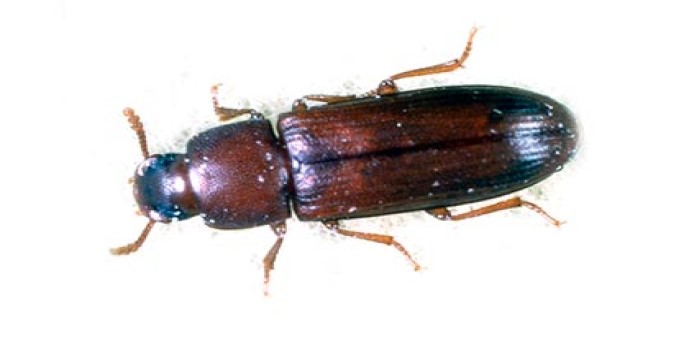
What do Flour Beetles Look Like?
In the United States, flour beetle infestations typically involve one of two species: the red flour beetle or the confused flour beetle. These insects are nearly indistinguishable from one another, sharing the same appearance, habits, preferred environments, food sources, and control strategies. In fact, the confused flour beetle earned its name because it was originally misidentified as the red flour beetle. Adult flour beetles measure roughly 1/8 to 1/4 inch long and have flat, oval bodies with a reddish-brown color, clubbed antennae, and wings—although only red flour beetles are capable of flight. Their eggs are extremely small, white, and cylindrical, coated with a sticky substance that allows them to cling to food materials. Females lay eggs in small clusters of two or three and may produce up to 1,000 eggs over their lifetime. After hatching within 5 to 12 days, tiny yellowish-white larvae emerge and feed for about 27 to 29 days before entering the pupal stage. Pupae resemble the larvae but are paler in color and last just 3 to 7 days before becoming adults. Once mature, flour beetles can survive for as long as three years.

Where do Flour Beetles Live?
Flour beetles are found worldwide, and while both species occur across much of the United States, their ranges tend to follow a general pattern. Red flour beetles are more commonly found in southern states, while confused flour beetles are typically seen in northern regions. These insects are mainly indoor pests, choosing to live close to their food supply. They are most often discovered inside stored food products or tucked away in cracks and crevices of pantries, cabinets, shelves, and baseboards, where they can remain hidden while continuing to spread.
What do Flour Beetles Eat?
Both adult and larval flour beetles feed on stored foods, with a strong preference for milled or processed products. They are commonly found in items such as flour, cornmeal, grains and cereals, shelled nuts, spices, chocolate and cacao, dried beans, peas, peppers, vegetables, and fruits, as well as dry pet food, birdseed, powdered milk, dried flowers, animal hides, and even museum specimens or certain medications. While flour beetles cannot eat whole, undamaged grains or unshelled nuts, they require very little to survive. In fact, they can live on tiny amounts of food, including the fine grain dust that naturally collects inside packaging as products rub together over time.
Are Flour Beetles Dangerous?
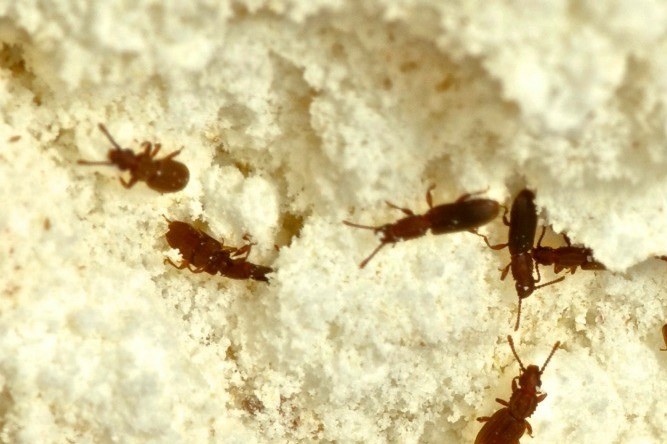
Despite how quickly flour beetle populations can grow, it’s a relief that they don’t pose a direct health threat to people or pets. They don’t bite or sting, aren’t poisonous, and aren’t known to spread disease. That said, their presence in stored foods is still a serious problem. Once beetles move in, food quickly becomes unsafe to eat and often has to be discarded, leading to unnecessary expense and waste. Beyond the obvious unpleasantness of finding beetles, eggs, larvae, or pupae in your pantry, these pests contaminate food as they live and feed in it. Infested products are often riddled with dead insects, fecal matter, and secretions, which can cause the food to develop a strong odor, turn grayish in color, and even promote mold growth when populations are high. Any food found to be infested should be discarded right away.

How do you Prevent Flour Beetles?
In most cases, a flour beetle infestation starts when the pests are unknowingly brought home from the store. Because of this, careful inspection is the single most important step in prevention. Before purchasing or bringing susceptible items into your home, take a moment to closely examine the packaging—especially products like flour, grains, cereals, and other dry goods. Avoid buying anything that shows signs of damage, such as leaking powder, holes, tears, chew marks, or cuts in cardboard or plastic packaging. These warning signs often indicate contamination, and bringing even one compromised item home can be enough to introduce flour beetles into your pantry.
Once you’re home, transfer all dry food items—including pet food—into tightly sealed glass or sturdy plastic containers. This not only helps keep pests out but also makes it easier to spot problems early. Make a habit of regularly checking your pantry and discarding foods that are expired or haven’t been used in a while. Extra care should be taken when buying in bulk; only purchase quantities you know you’ll use in a reasonable amount of time. Otherwise, those forgotten bags and boxes can end up sitting on shelves and becoming an ideal breeding ground for pantry pests.
Good sanitation is another key factor in keeping flour beetles out of your home. Regularly sweep or vacuum and wipe down areas where food is stored or prepared to remove crumbs and food dust that can attract pests. Any spills should be cleaned up right away before they become a food source. If possible, sealing cracks and crevices in pantry shelves with caulk can make cleaning easier and reduce the places where crumbs can hide, helping to eliminate potential harborage areas for beetles.
Finally, at the first hint of a pest issue, don’t wait for it to get worse. Call The Bug Dude at 800-310-BUGS (2847) and have a trained technician inspect the situation and provide targeted treatment. Addressing the problem early can save time, money, and frustration—stopping a minor concern before it turns into a full-blown infestation.
How do you Eliminate Flour Beetles?
Once flour beetles have been confirmed in your home, taking fast action is critical to keep the problem from spiraling out of control. Left unchecked, a small issue can quickly turn into thousands of pests and a growing pile of wasted food. At the first sign of trouble, contact The Bug Dude at 800-310-BUGS (2847) to schedule treatment for the affected areas. A Bug Dude technician can also help identify additional hiding spots that may be contributing to the problem. After the source of the infestation has been located and removed, thoroughly clean the impacted space—whether that’s a single cabinet, the pantry, or the entire kitchen. Be diligent: sweep or vacuum, remove and clean beneath shelf liners, wash and fully dry shelves, and pay close attention to cracks and crevices where beetles or food debris may remain.
This year, as you embrace the mantra of “out with the old and in with the new” for 2026, don’t overlook your kitchen and pantry. Taking the time to clean, organize, and inspect these spaces can help ensure the new year starts off on the right foot—prosperous, organized, and free from unwanted pests.
Further Reading:
“Flour Beetles” – Mike Merchant, Bradleigh S. Vinson, and Wizzie Brown – Extension Entomology – Texas A&M Forest Service
“common name: confused flour beetle & common name: red flour beetle” – Rebecca Baldwin and Thomas R. Fasulo, University of Florida – Featured Creatures – Entomology & Nematology – University of Florida
“Reason No. 138 to Decant Dry Goods (Or, How to Prevent Flour Beetles: A Cautionary Tale)” – Annie Quigley – The Organized Home
“Stored Product Pests: Red And Confused Flour Beetles” – Linda J. Mason, Extension Entomologist – Purdue University
“[Tech Talk] Stored Product Pests — America’s Enemy” – Jeff Weier, BCE – PCT Magazine

